Seven Jumps
A Traditional Danish Folk Dance for the Elementary Music Classroom
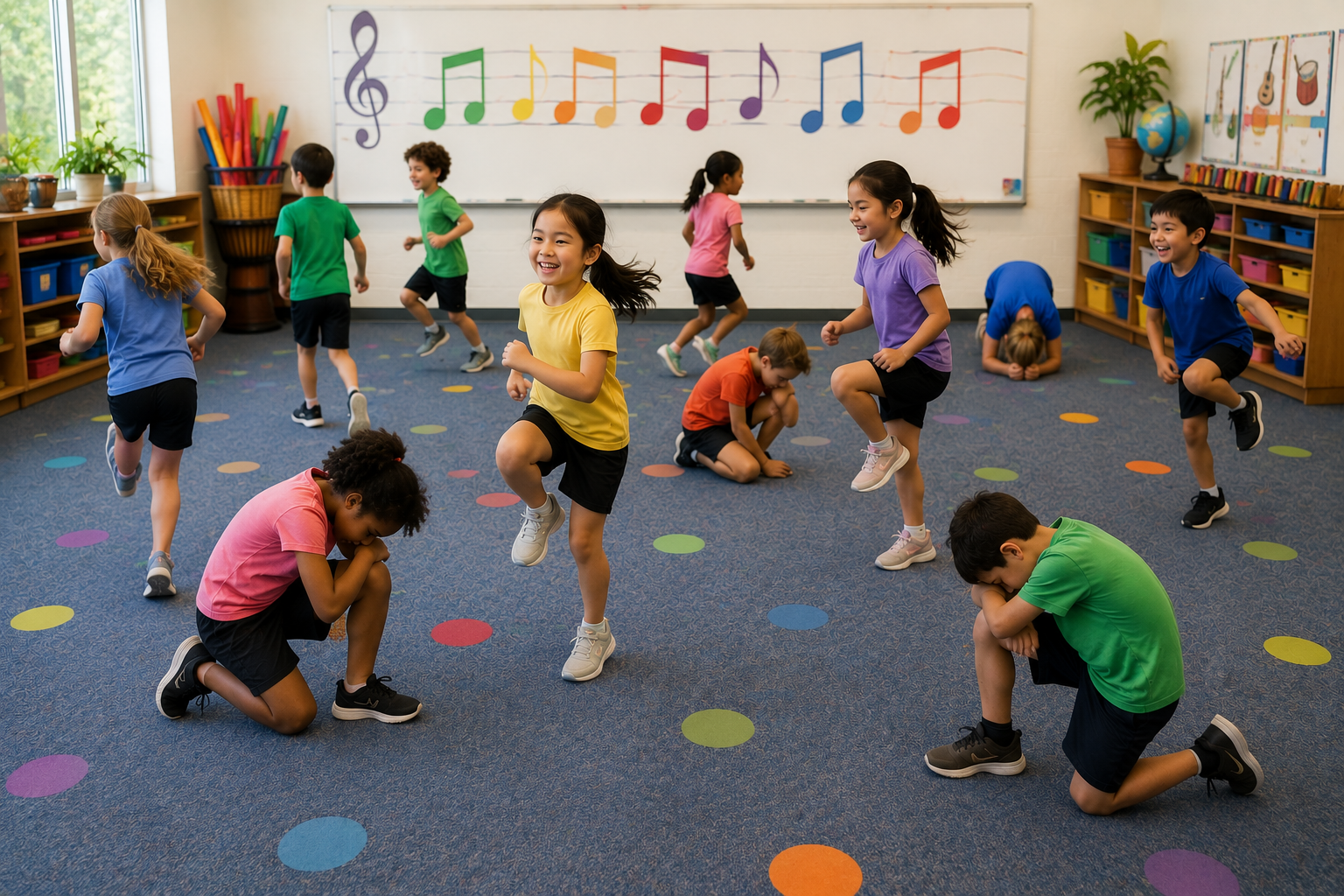
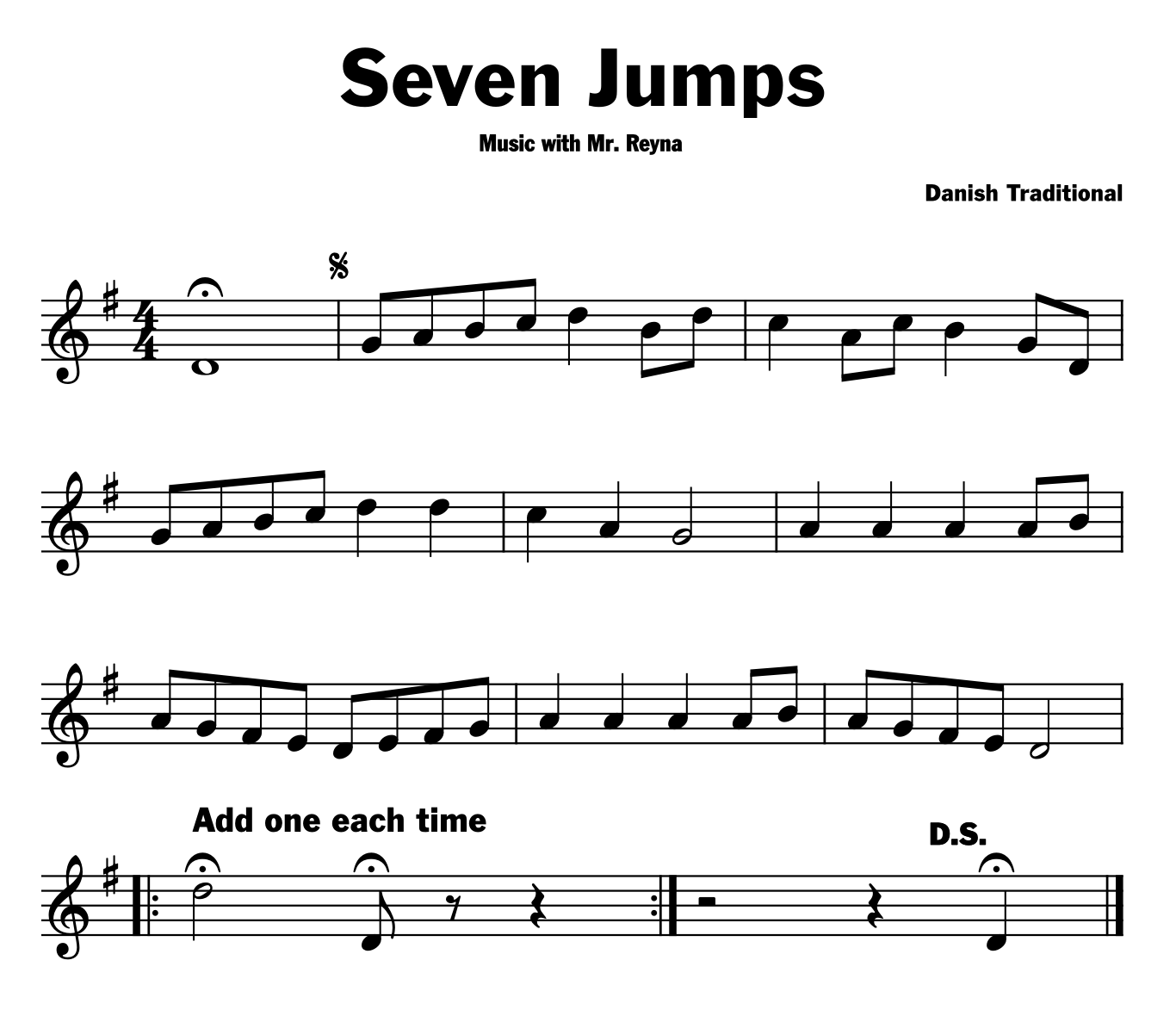
Seven Jumps, also known as Syvspring, is a traditional Danish folk dance and one of my favorite movement activities for the elementary music classroom. The dance features a repeating musical pattern with a sequence of movements that grows longer each time. By the end, students are balancing, kneeling, and getting closer and closer to the floor—which usually results in plenty of laughter!
I especially love using Seven Jumps at the beginning of the school year. Rather than spending an entire first music class talking about rules and expectations, Seven Jumps gives students an opportunity to experience what I want music class to feel like: active, joyful, musical, and fun. At the same time, it gives us an authentic opportunity to practice some of our most important movement routines.
History of Seven Jumps
Seven Jumps is a traditional folk dance associated with Denmark, particularly Jutland, where versions of the dance have been documented for many years. Its Danish name, Syvspring, translates roughly to “Seven Jumps.”
The dance belongs to a larger family of European dances built around a sequence of accumulating movements. Related versions have been documented in places including the Netherlands and Germany. Although the exact origins of Seven Jumps are uncertain, the dance has sometimes been connected with older ritual or agricultural traditions. One theory suggests that jumping dances may once have been associated with encouraging crops to grow—the higher the jump, the taller the crop! As with many traditional folk dances passed down over generations, however, the original meaning of the movements cannot be known for certain.
In traditional versions of the dance, movements are gradually added until dancers perform a sequence involving the feet, knees, elbows, and finally the head or forehead near the floor. This cumulative structure is one of the things that makes the dance so engaging for children: each repetition presents a new challenge while asking students to remember everything that came before.
The Shenanigans Recording
The recording I use is performed by Shenanigans, an Australian world-music and folk-dance group with an important connection to music education.
Shenanigans was co-founded in the early 1980s by music and dance educators Gary King, Audrey Klein, and Christoph Maubach. The group became particularly well known within the Orff Schulwerk community for arranging and recording folk dances from cultures around the world. Their work emphasized authentic instruments, accessible arrangements, movement, and music that could be successfully used with children.
Their recording of Seven Jumps appeared on Children’s Dances of Terra del Zur, Vol. 1 in 1994 and was later included on Dance Music for Children Level 1. The Shenanigans recordings have become staples in elementary music classrooms and folk-dance workshops around the world.
Using Seven Jumps on the First Day of Music
Seven Jumps is one of my favorite activities for the first day of music class because students immediately get to move, listen, laugh, and make music together.
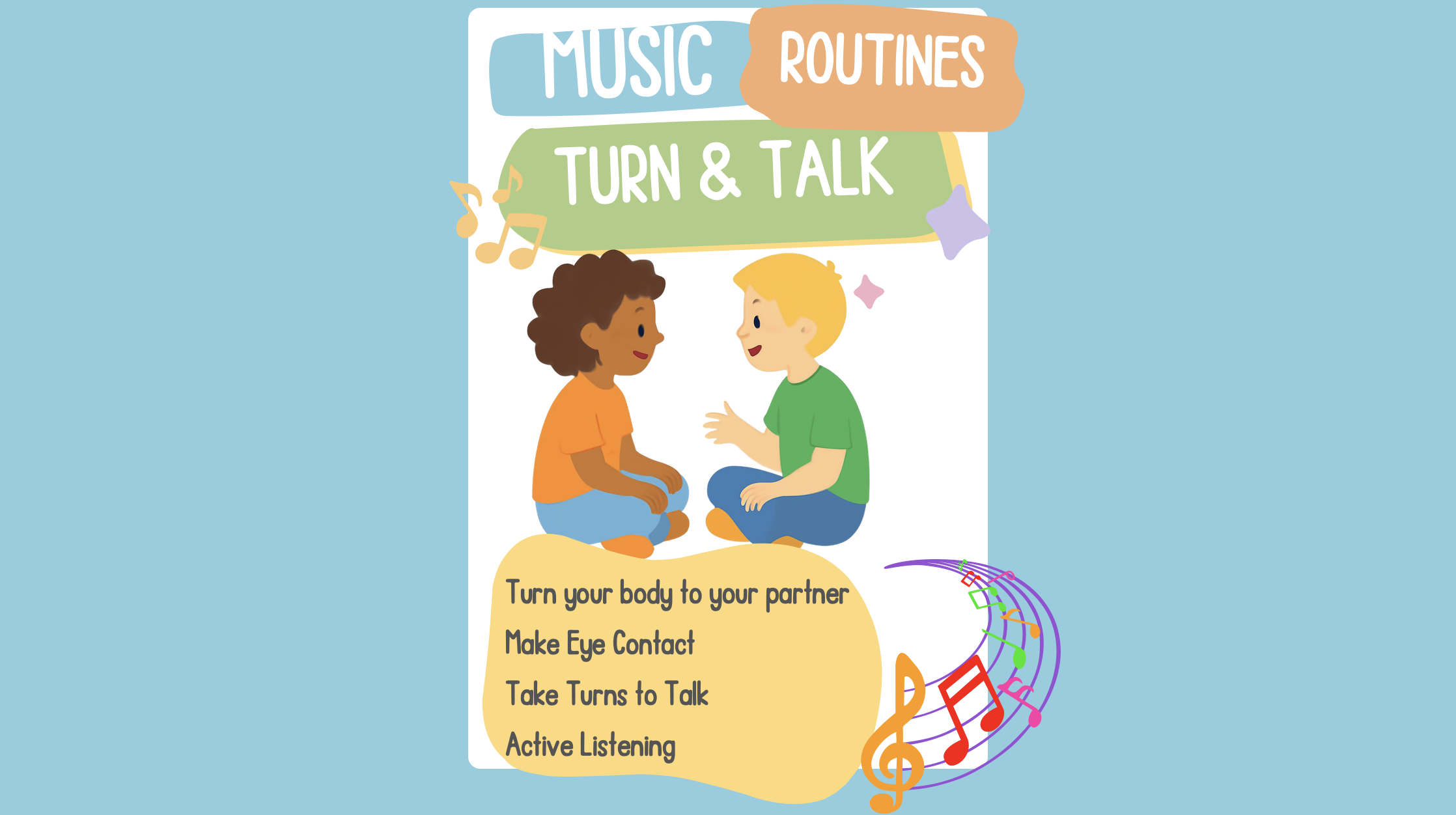
I also use the dance to introduce and reinforce my classroom movement routine:
Stay in your bubble. Keep enough personal space around your body to move safely.
Watch where you’re going. Be aware of the people, objects, and walls around you.
Listen to the music. Let the music tell you when to move, stop, and change.
Show the music with your body. Move purposefully and respond to what you hear.
Instead of simply telling students these expectations, Seven Jumps allows them to practice the expectations while actually making music.
Practicing Scatter Formation
Before beginning Seven Jumps, I also use the activity to teach scatter formation.
A scatter formation simply means that students spread throughout the available space rather than standing in a circle, line, or assigned carpet spot. Each student finds an individual “spot” with enough open space around them to move safely.
When moving from our carpet spots into scatter formation, our expectations are:
Walk safely.
Voices off.
Listen for instructions.
Find an open spot.
A good spot has open space around it; no person, object, or wall immediately nearby.
Before the entire class tries it, I choose one student to model the transition. The class watches carefully, and afterward we discuss what we noticed: What did this student do that made the transition safe and successful?
Then the whole class tries it.
This turns something as simple as “spread out around the room” into an explicitly taught classroom routine that we can use throughout the rest of the school year.
A Great Activity for a Substitute Teacher
Seven Jumps is also an excellent substitute music lesson. Once students are familiar with the movement sequence and classroom expectations, the recording provides much of the structure of the activity itself.
A substitute can review the movement expectations, have a student demonstrate how to find a safe scatter spot, and then lead the class through the dance. Because the movements accumulate with each repetition, students are naturally challenged to listen, remember the sequence, and follow the music.
It’s simple to teach, requires little or no equipment, works with a wide range of elementary ages, and—most importantly—is a lot of fun.
Resources
You May Also Like
More from the Blog