Vivaldi’s Four Seasons
Scarf Movement Videos to help teach music by the famous baroque composer.

The Four Seasons is a set of four violin concertos composed in 1725 by Antonio Vivaldi, each vividly portraying a different time of year through instrumental storytelling. From birdsong and thunderstorms to harvest dances and winter blizzards, the music paints scenes that invite imagination and movement. In this movement collection, each concerto is reimagined through scarves and expressive body movement, allowing students to physically embody the energy, emotion, and contrasts within the music. Using scarves supports kinesthetic learning, spatial awareness, emotional expression, and focused listening, helping students connect deeply with classical music in an active and memorable way.
Movement 1: Allegro
Movement 2: Largo
Movement 3: Allegro
Spring
In the first movement of Spring from the music bursts to life with the sounds of the new season. The bright violin melodies represent birds joyfully singing, while the flowing string passages suggest gentle streams moving through the countryside. Suddenly, the music shifts as a brief thunderstorm rolls in, heard through fast tremolos and dramatic accents. But just as quickly as it arrives, the storm passes, and the birds return. This movement is one of the earliest examples of program music, where instrumental music vividly paints a scene from nature.
The second movement offers a peaceful contrast to the lively first movement. Here, the music portrays a shepherd resting in a quiet meadow while his faithful dog keeps watch nearby. The solo violin sings a calm, gentle melody above soft accompanying strings, creating a serene atmosphere. Listen closely and you can hear the viola repeating short notes that imitate the dog’s bark. This tranquil movement captures the stillness and warmth of a spring afternoon in the countryside.
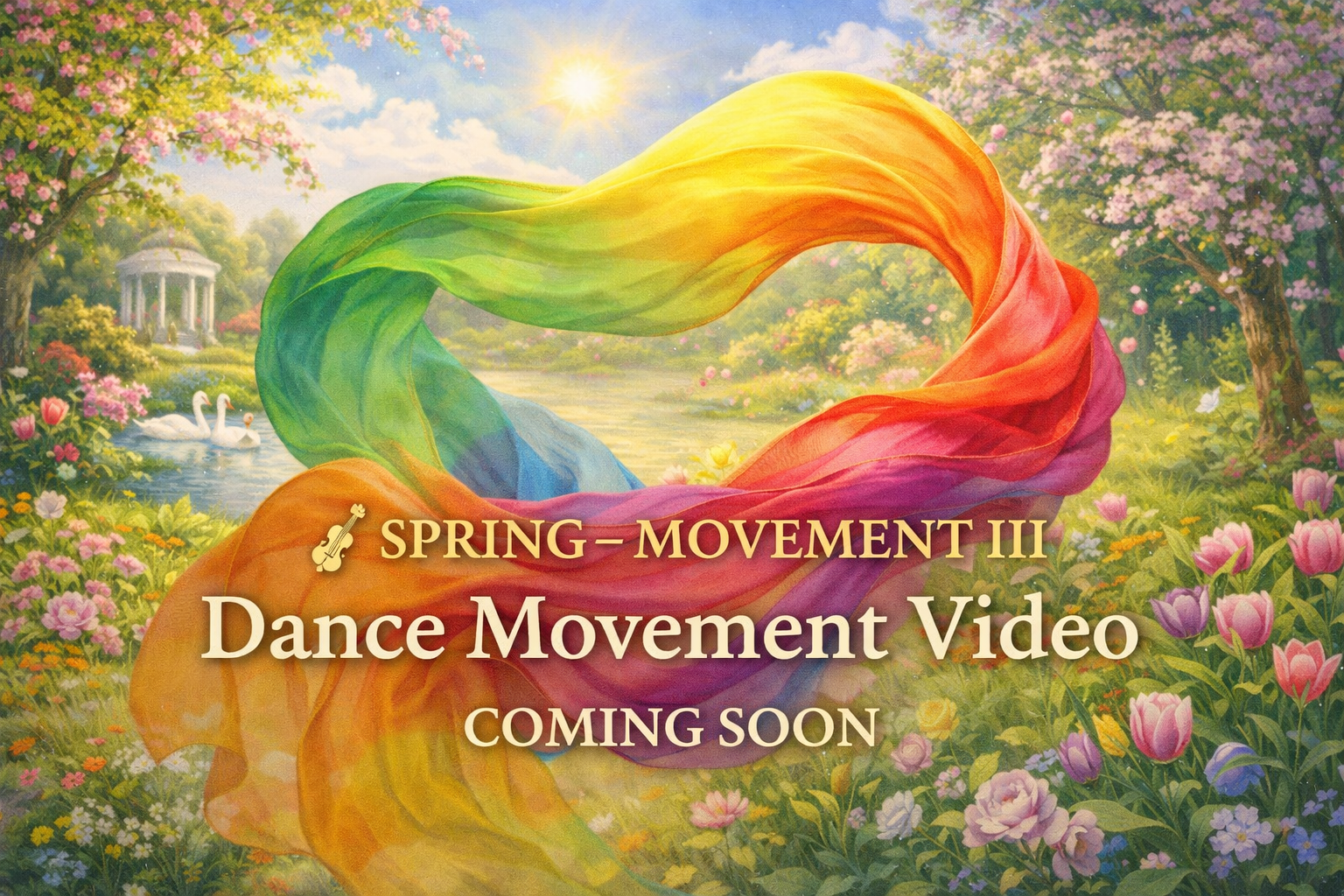
The third movement celebrates the joy of the season with a lively rustic dance. In the accompanying sonnet, villagers gather to rejoice in the beauty of spring, and the music reflects their energy with bright rhythms and buoyant melodies. The lower strings create a steady, drone-like accompaniment reminiscent of bagpipes, while the solo violin leads the festive dance. This movement invites expressive, structured movement and group choreography as the music captures the spirit of celebration in the countryside.
This movement is currently in development as part of the ongoing Four Seasons movement collection.
Summer
Movement 1: Allegro Non Molto
The first movement of Summer paints a picture of intense heat hanging heavily over the countryside. The music begins with a tense, slow-burning atmosphere, as if the air itself feels thick and still. In the accompanying sonnet, birds call in the distance while a shepherd grows uneasy as thunder rumbles far away. Sudden bursts in the strings suggest flashes of lightning, and restless rhythms create a sense of anticipation. This movement captures the feeling that a powerful storm is approaching, building suspense through contrast and dramatic dynamic shifts.
Movement 2: Adagio
The second movement of Summer shifts into a more reflective and uneasy atmosphere. In Vivaldi’s original sonnet, a shepherd attempts to rest while insects buzz and distant thunder threatens in the background. In this movement video interpretation, the music becomes the story of colorful kites soaring through the sky. At first, the kites drift gracefully and explore different shapes and movements, carried gently by the wind. As the music grows more restless, tension builds in the sky — and suddenly lightning strikes, dramatically interrupting the calm. The contrast between floating stillness and sudden bursts of energy makes this movement especially powerful for expressive and dynamic movement.
Movement 3: Presto
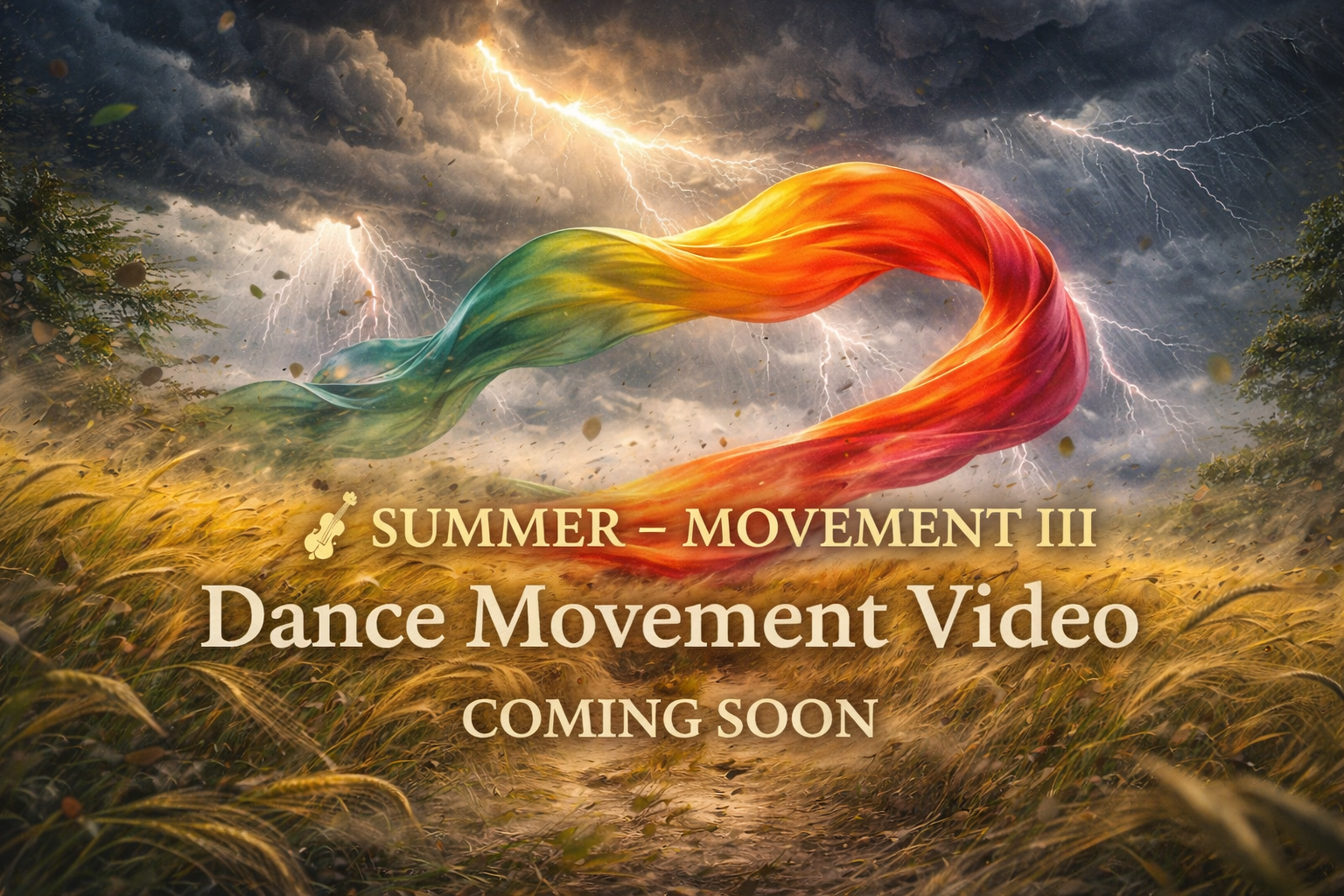
The third movement of Summer erupts into a dramatic and powerful storm. In the accompanying sonnet, the long-awaited thunderstorm finally breaks, unleashing fierce winds, lightning, and heavy rain that devastate the countryside. The music is fast and relentless, driven by rapid string passages and sharp accents that create a sense of urgency and intensity. Sudden dynamic contrasts and racing rhythms vividly capture the chaos of nature at full force. This movement offers exciting opportunities for bold, energetic movement and dramatic storytelling as the storm reaches its peak.
This movement is currently in development as part of the ongoing Four Seasons movement collection.
Movement 1: Allegro
Movement 2: Adagio Molto
Movement 3: Allegro
Autumn
The first movement of Autumn begins with joyful celebration, as villagers gather to dance and rejoice in the harvest. The music is bright and energetic, full of rhythmic vitality and festive spirit. In this movement video interpretation, the celebration becomes a community of leaves dancing happily together in the breeze. As the music shifts and grows more intense, the wind strengthens, tossing the leaves apart and scattering them in different directions. Feelings of frustration, anger, and sadness emerge as they find themselves separated. But just as the tension peaks, the leaves awaken to realize it was only a dream — and the joyful music returns as they reunite and dance together once more. This movement offers rich opportunities for exploring emotional expression, contrast, and social-emotional learning through movement.
The second movement of Autumn offers a calm and reflective contrast to the lively celebration of the first movement. In the original sonnet, the villagers who rejoiced in the harvest now rest peacefully. In this movement video interpretation, the music becomes a gentle transition from late summer into fall and the first hints of winter. Squirrels gather nuts in preparation, deer graze cautiously while watching their surroundings, and foxes leap gracefully through the changing landscape. As the music softens, a warm sunset fills the sky, gradually giving way to the first delicate snowfall of the season. The serene pacing and subtle shifts in tone make this movement ideal for expressive, slow movement and for exploring themes of preparation, change, and the beauty of seasonal transition.
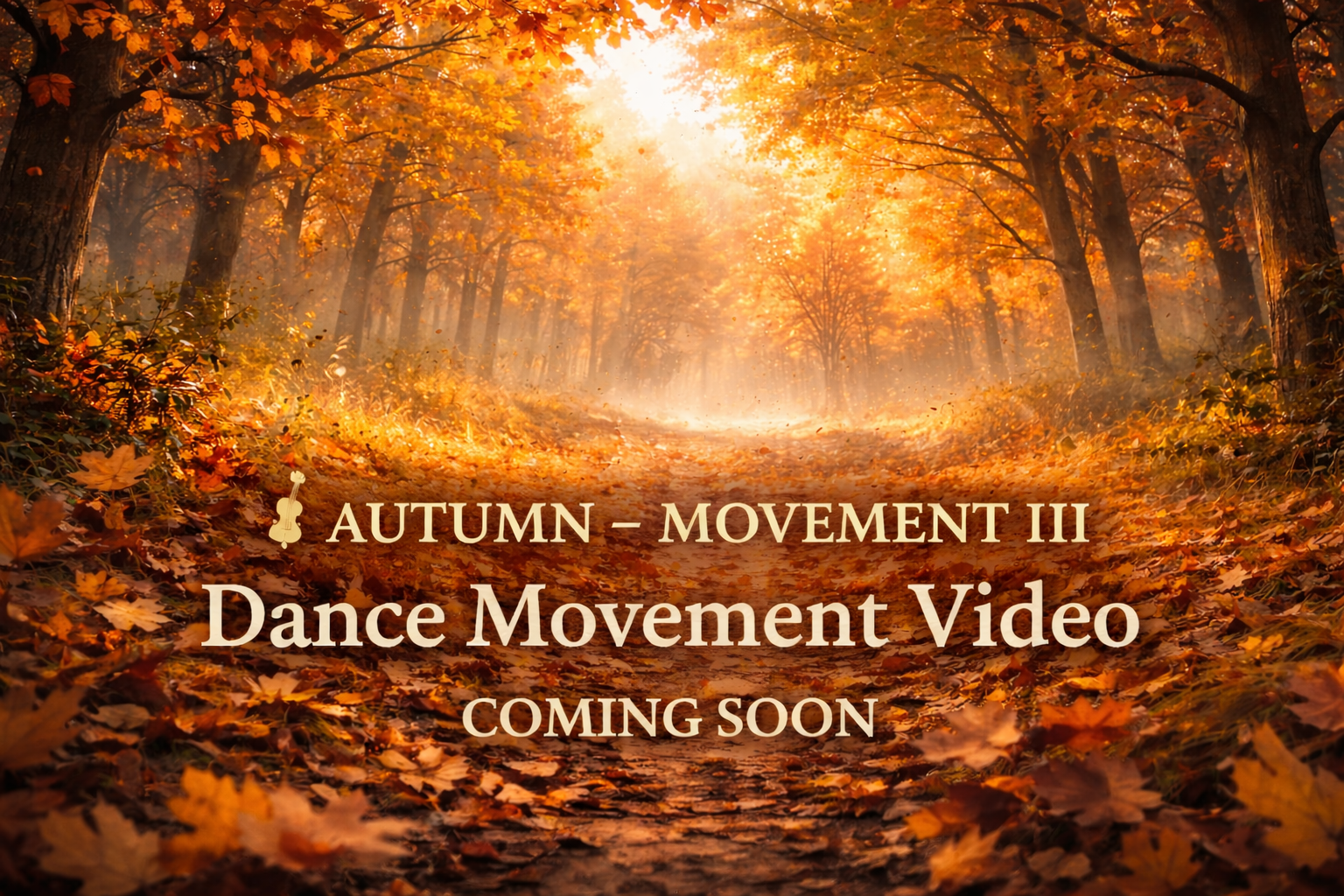
The third movement of Autumn bursts into an energetic hunting scene. In the original sonnet, hunters set out at dawn with horns and hounds, chasing their prey through the countryside. The music is lively and driving, filled with rhythmic momentum and bold accents that suggest galloping movement and echoing horn calls. Rapid passages in the strings create a sense of pursuit and excitement, while dynamic contrasts heighten the drama of the chase. This movement provides exciting opportunities for strong, rhythmic movement, spatial awareness, and dramatic storytelling.
This movement is currently in development as part of the ongoing Four Seasons movement collection.
Movement 1: Allegro non molto
Movement 2: Largo
Movement 3: Allegro
Winter
The first movement of Winter captures the biting chill of a relentless snowstorm. In the original sonnet, the music portrays shivering in the cold, stamping feet, and teeth chattering as icy winds sweep across the landscape. In this movement video interpretation, the scene becomes a fierce blizzard, with the body reacting to the freezing air. Trembling gestures reflect the quick repeated notes in the strings, while sudden dynamic surges mirror gusts of wind that grow increasingly intense. As the music accelerates and swells, movements become more frantic, embodying the struggle against the storm’s force. This movement is especially powerful for exploring tension, contrast, and full-body expressive movement.
The second movement of Winter offers a peaceful contrast to the intensity of the opening storm. In the original sonnet, the scene shifts indoors, where warmth by the fire provides comfort while rain falls gently outside. In this movement video interpretation, the music becomes a moment of quiet wonder in the snow. Slow, flowing gestures trace delicate shapes in the air, as if forming snowflakes or creating snow angels suspended in stillness. The smooth, sustained violin melody invites graceful, controlled movement, while the gentle accompaniment beneath suggests the soft falling of snow. This movement is ideal for exploring calm focus, breath, spatial awareness, and the beauty of slow, intentional motion.
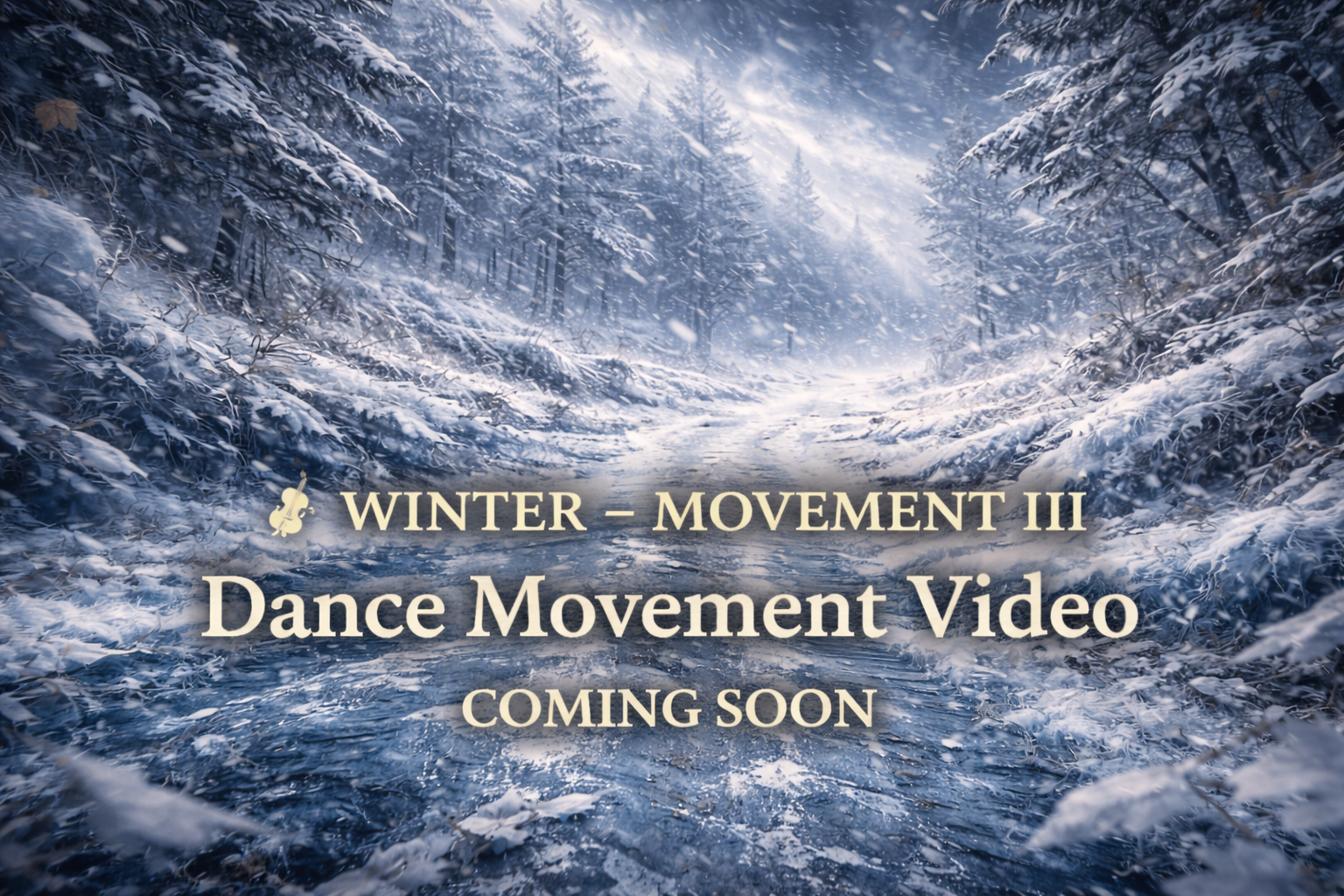
The third movement of Winter bursts back into motion with icy energy and relentless momentum. In the original sonnet, the scene depicts walking carefully across frozen ground, slipping, falling, and scrambling to regain balance as the wind whips through the air. The music is fast and sharp, filled with driving rhythms and sudden accents that create a sense of instability and urgency. Rapid passages in the strings suggest skidding across ice, while dynamic contrasts heighten the feeling of danger and excitement. This movement offers exciting opportunities for exploring balance, quick directional changes, and dramatic contrast through expressive movement.
This movement is currently in development as part of the ongoing Four Seasons movement collection.