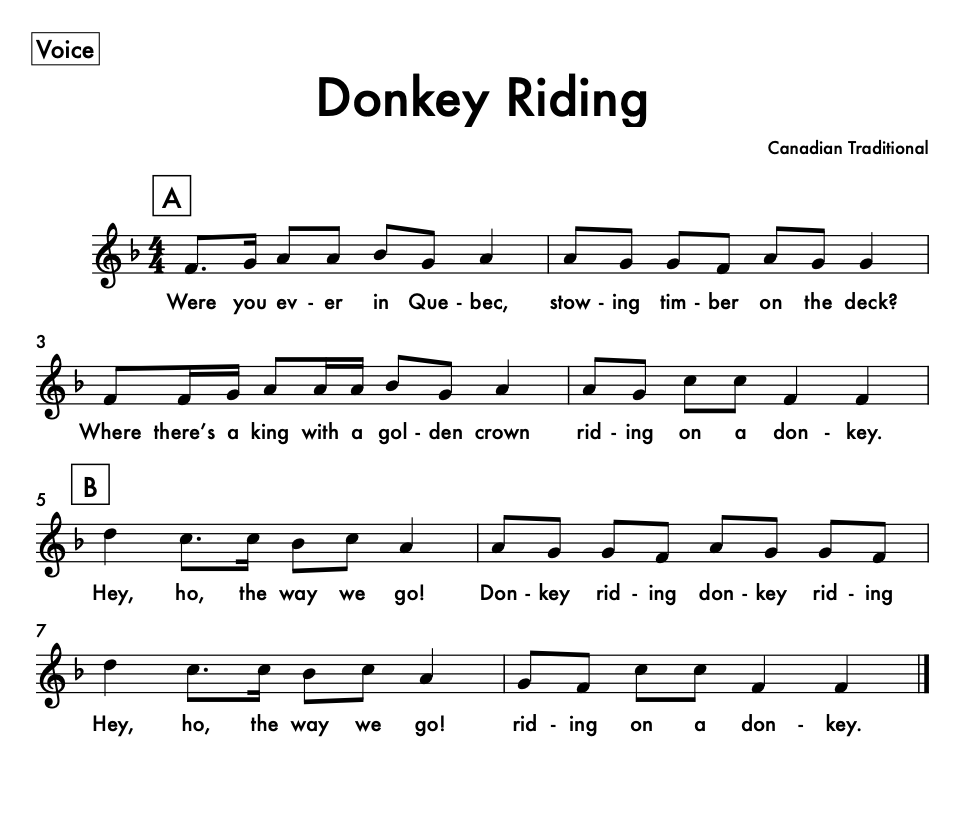
Donkey Riding
Were you ever in Quebec?
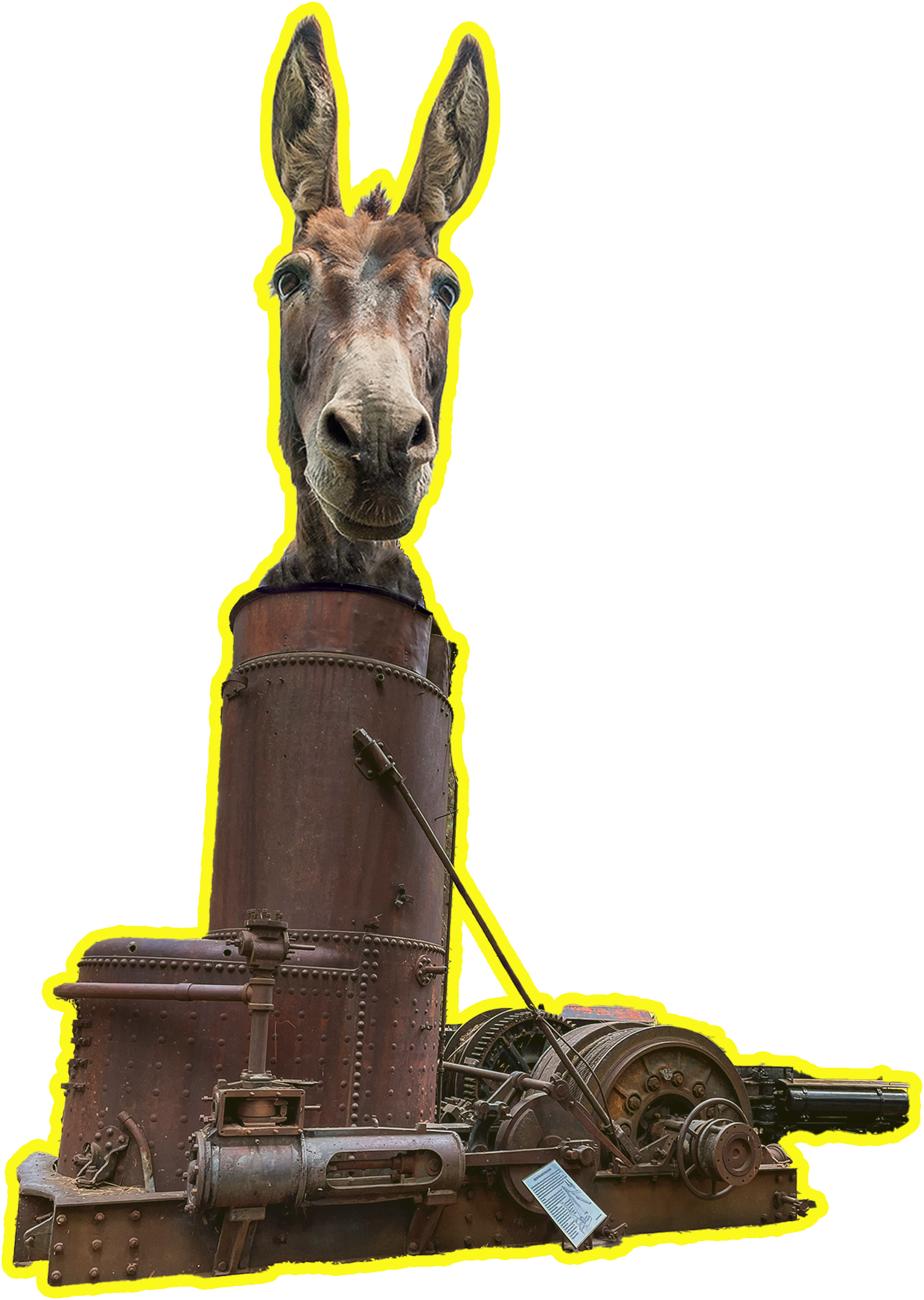
Donkey Riding” is a traditional Canadian folk song that was commonly sung by sailors in the 1800s. It is especially associated with the ports of eastern Canada, where dockworkers used donkeys (or “donkey engines”—small steam-powered winches) to help load and unload cargo from ships. The song’s lively rhythm made it popular as a work song and sea shanty, helping workers coordinate their movements while making long days at the docks more enjoyable.
Today, Donkey Riding is taught in elementary music classrooms as an introduction to sea shanties and as a way to teach certain rhythmic concepts such as dotted eighth-sixteenth notes (tim-ka) and quarter sixteenth-note pair notes (ti-tika), melodic concepts such as the hextatonic scale, and I-V chords.
Lesson Ideas
Learn the Song: Teach the melody by echo singing one phrase at a time before singing the complete song together.
Discuss the History: Introduce the idea of sea shanties and work songs. Talk about how music helped people work together before machines did most of the heavy lifting.
Keep the Beat: Have students pat, clap, or tap the steady beat while singing. Older students can identify and perform the rhythm of the melody.
Movement Activity: Invite students to pretend they are sailors loading cargo, pulling ropes, rowing, or leading donkeys as they move to the beat of the music.
Play the Melody: Transfer the melody to Orff instruments, Boomwhackers, bells, or recorders. Begin with small sections before performing the complete song. Use the play-along video as a guiding resource.
Play the chords: Use ukuleles to play the I-V chord progression to the song.
Creative Extension: Have students create an additional verse describing another job that might have been done at a busy harbor, using the melody of the song.
Cross-Curricular Connections: Connect the song to lessons about Canadian geography, transportation, trade, or life aboard sailing ships during the 1800s.
Recommended Grades: 4-5
Skills Practiced: tim-ka, ti-tika, hexatonic scale, verse & chorus, I-V chord progression
Materials Needed: none, or optional rhythm sticks/drums
Resources